
Parenting already comes with a thousand questions. Add migration, cultural differences, identity concerns, social media, and the fast pace of modern life, and things can feel even more complicated. For many families, raising Muslim children in Australia means figuring out how to preserve Islamic values while still helping children feel comfortable, confident, and connected to the world around them.
Some days feel manageable. Other days… not so much.
A parent might spend years teaching kindness, prayer, and good manners, only for their child to come home from school asking, “Why am I different from everyone else?” Those moments can catch parents off guard, even when they expect them. And honestly, they happen in many Muslim households.
Still, there’s another side to this conversation that people sometimes forget. Australia’s multicultural environment also creates opportunities. Muslim children grow up meeting people from different backgrounds, learning respect, independence, and adaptability from an early age. The challenge isn’t simply protecting children from society. It’s helping them move through society with confidence, balance, and a strong sense of identity.
That balance takes work. Quiet work, usually.
What Makes Raising Muslim Children in Australia Unique?
Children growing up in Australia often move between two different environments every day. Home may revolve around Islamic routines, cultural traditions, family expectations, and community gatherings. School, sports clubs, or social events can feel completely different.
For kids, switching between those spaces can sometimes feel confusing. Not always dramatically confusing. Sometimes it’s subtle.
A mother in Melbourne once shared that her eight-year-old daughter came home upset because she was the only child fasting during Ramadan practice days at school. Nobody bullied her. Nobody even said anything rude. She just suddenly felt “different.” Small moments like that stay with children longer than adults realize.
That’s why emotional reassurance matters so much.
Parents often worry about whether their children will “fit in,” but children usually adapt better when they feel secure at home first. A child who feels emotionally safe tends to handle outside pressure more confidently too.
And really, strong family foundations don’t always come from big speeches. They come from ordinary moments. Dinner conversations. Weekend drives to the mosque. Parents asking, “How was your day?” and genuinely listening to the answer.
Simple things. Repeated often.
Teaching Islamic Values in Everyday Life
One mistake many parents unintentionally make is presenting Islam only through rules and restrictions. Don’t do this. Don’t wear that. Don’t go there.
But children connect more deeply when faith feels meaningful and warm-not just disciplinary.
Teaching Islamic values often happens quietly, almost in the background of daily life. A parent helping their child apologize sincerely after hurting a sibling is teaching character. A father stopping to help a neighbor carries a lesson too, even if nobody says it out loud.
Children notice these things. More than we think, honestly.
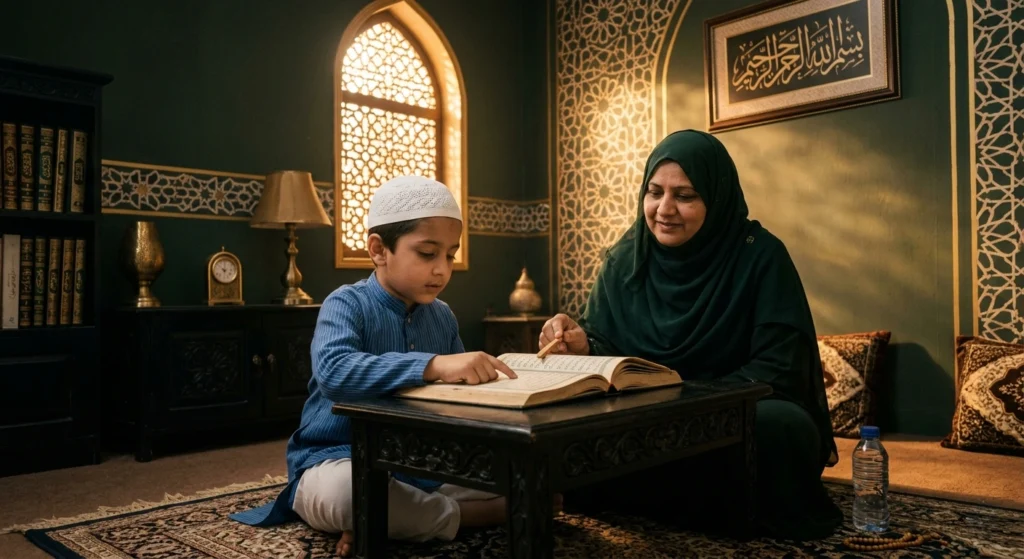
Small routines help as well. Reading Quran stories before bed. Making dua together in the car. Saying “Alhamdulillah” naturally after good news. Those little habits slowly shape a child’s understanding of faith without making every interaction feel formal.
There was a father in Sydney who mentioned that he struggled getting his son excited about salah. Lectures didn’t work. Eventually, he stopped forcing long conversations and simply invited his son to pray beside him quietly after Maghrib. No pressure. No dramatic speeches. Over time, the resistance softened.
Sometimes gentleness works where intensity doesn’t.
Parents also have to remember something uncomfortable at times: children watch behavior more carefully than words. A parent who speaks about honesty but constantly lies on phone calls (“Tell them I’m not home”) sends mixed messages without realizing it.
Kids catch contradictions quickly.
Muslim Parenting in Australia’s School Environment
School is usually where identity questions become more visible. Children start noticing differences around food, clothing, holidays, friendships, even casual conversations.
A child may ask why nobody else leaves school for Eid. Another might feel awkward explaining why they don’t eat certain foods at parties. These aren’t always major crises. But repeated small experiences can affect confidence over time.
One teenager described feeling exhausted answering questions about hijab almost every week at school. Not because the questions were hateful-most weren’t-but because constantly explaining yourself can become tiring after a while.
Parents can’t control every environment their child enters. Nobody can. But they can prepare children emotionally and mentally.
Open conversations help a lot here. Instead of immediately dismissing concerns with “Just ignore it,” it’s often better to ask follow-up questions. What happened exactly? How did it make you feel? What would you like to do next time?
Children need guidance, yes. But they also need to feel heard.
At the same time, participation matters too. Muslim children shouldn’t grow up feeling they must isolate themselves completely from society. Sports, volunteering, academics, creative activities-these experiences help children build confidence and social skills while still maintaining their faith.
Balance matters. Probably more than perfection.
The Role of Islamic Education for Children
Most Muslim parents want their children to stay connected to Islam long-term. The question is usually how.
Weekend Islamic schools continue to play an important role for many families across Australia. Beyond Quran learning, these spaces often give children something equally valuable: community. Seeing other Muslim children their age can reduce feelings of isolation quite a bit.
Mosques help too, especially when they create welcoming environments for younger generations. Children remember how spaces make them feel. If every mosque visit feels stressful or overly critical, kids may disconnect emotionally without saying much about it.
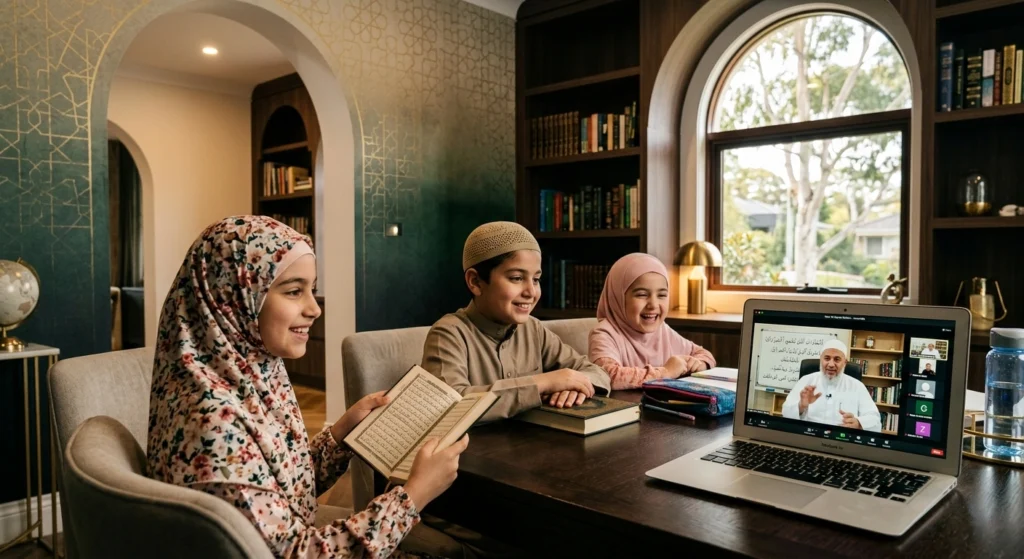
Online Quran classes have also become more common, especially for busy families. And honestly, they can work really well when teachers know how to engage children properly. Flexibility helps parents manage schedules without sacrificing consistency in Islamic education.
Still, there’s no single perfect model.
Some families prefer Islamic schools. Others combine public schooling with home learning and mosque programs. Some even try homeschooling for a few years before changing direction again. Parenting choices evolve sometimes. That’s normal.
The real goal isn’t creating perfect children. It’s helping children develop sincerity, understanding, and a stable relationship with faith as they grow older.
Managing Technology and Social Media the Islamic Way
This part feels impossible some days, doesn’t it?
Technology surrounds children constantly now. Phones, tablets, YouTube, gaming platforms, social media-it starts young. Very young.
Completely banning devices often backfires eventually. Children become curious anyway, especially when everyone around them uses technology daily. Guidance tends to work better than fear-based control long-term.
Healthy boundaries matter though. Device-free dinners. Screen limits before bedtime. Conversations about online behavior instead of silent monitoring only.
One parent mentioned noticing her son becoming unusually quiet after spending hours scrolling online. Nothing dramatic happened. He just seemed emotionally drained all the time. Once the family introduced more outdoor activities and reduced evening screen use slightly, his mood improved noticeably within weeks.
Small adjustments can make a bigger difference than expected.
Social media also shapes self-image in subtle ways. Children compare clothes, popularity, appearance, lifestyles. Constant comparison affects confidence quietly, especially during teenage years.
Parents should talk openly about digital ethics too. Kindness, modesty, honesty, respect—those values apply online just as much as offline. Maybe even more sometimes.
Helping Muslim Children Build a Strong Identity
Children who feel secure in their identity usually handle outside pressure more calmly. Not perfectly, of course. But with more resilience.
One helpful approach is introducing children to positive Muslim role models early. These don’t have to be celebrities or scholars necessarily. Sometimes it’s a kind teacher, a thoughtful older cousin, or a successful community member who practices Islam naturally and confidently.
Representation matters because children absorb what feels possible.
Community connection matters too. A child who has Muslim friends often feels less alone navigating school life or social challenges. Eid gatherings, youth programs, Islamic camps, weekend activities-they may seem small, but they quietly strengthen belonging.
There’s another important point here that parents sometimes overlook. Constant criticism can damage confidence over time, even when intentions are good.
If children only hear correction, they may begin associating religion with disappointment or pressure. They need encouragement too. Room to ask questions. Space to struggle occasionally without feeling judged immediately.
And yes, mental health deserves attention here as well. Some Muslim teenagers feel intense pressure balancing family expectations, cultural identity, and social life all at once. Listening carefully matters more than giving instant lectures sometimes.
Practical Islamic Parenting Tips for Daily Family Life
Most families aren’t running perfectly organized Islamic households every day. Real life is messier than that.
Consistency usually matters more than intensity anyway.
Simple routines often shape children quietly over time. Friday reminders. Shared duas before leaving the house. Reading Quran together for even ten minutes after Maghrib. Small habits repeated consistently tend to stay longer than occasional grand efforts.
Parents should also feel comfortable admitting mistakes occasionally. Strange as it sounds, children often respect honesty more when parents acknowledge imperfections openly.
A mother once apologized to her teenage daughter after overreacting during an argument. The daughter later admitted that apology changed their relationship because it made communication feel safer. Tiny moments like that matter deeply.
Another practical habit is connecting Islamic values to ordinary situations. Helping a sibling becomes an example of kindness. Returning lost property becomes honesty in action. Faith starts feeling alive instead of theoretical.
And honestly? Some days everything still falls apart. Kids argue. Parents lose patience. Schedules collapse.
That’s family life sometimes.
Common Challenges Muslim Parents Face in Australia
Many Muslim parents quietly carry the same fear: “What if my children slowly drift away from their faith?”
It’s a real concern. Especially in environments where social values may differ significantly from what children learn at home.
Work-life balance creates another challenge. Parents often juggle long working hours, school schedules, Islamic education, financial pressure, and emotional parenting responsibilities all at once. Exhaustion affects consistency. That’s just reality.
There’s also pressure from multiple directions sometimes. Some families feel judged outside the Muslim community, while others feel heavily judged within it. Trying to meet every expectation becomes emotionally draining after a while.
Children usually respond better to calm structure than harsh control though. Warmth matters. Stability matters. Emotional connection matters too-probably more than parents realize during busy years.
Support systems help enormously here. Trusted teachers, community mentors, relatives, parenting groups. Nobody handles parenting completely alone, even if it feels that way occasionally.
Raising Confident Muslim Teens in a Changing World
Teenage years bring bigger questions. Identity, friendships, independence, university life, relationships, future goals-it all starts arriving quickly.
And teens want conversations, not constant lectures.
Parents who listen without reacting immediately often maintain stronger trust with their teenagers. That doesn’t mean agreeing with everything. It simply means creating space where children feel safe speaking honestly.
One university student shared that he stopped discussing problems with his parents for years because every conversation immediately turned into criticism. Eventually, he found guidance elsewhere-sometimes good guidance, sometimes not.
That happens more often than families realize.
Teenagers also need responsibility. Volunteering, mentoring younger kids, helping organize community events-these experiences build maturity and confidence naturally.
Most importantly, faith should never feel based entirely on fear. Islam also teaches mercy, growth, forgiveness, patience, and hope. Young people need to hear that side clearly too.
Final Thoughts on Raising Muslim Children in Australia
There’s no flawless parenting formula waiting somewhere. Every family experiences different challenges, personalities, routines, and struggles.
Still, one thing remains consistent across strong families: connection.
Children don’t need perfect parents. They need emotionally present parents. Parents who listen carefully, guide patiently, apologize when necessary, and try again after difficult days.
Raising Muslim children in Australia may feel challenging at times, but it also creates opportunities for resilience, empathy, confidence, and meaningful identity. Small consistent efforts inside the home often shape children far more deeply than dramatic parenting moments ever do.
So if things feel overwhelming occasionally, that’s okay. Many parents quietly feel the same way.
Take it step by step. Small moments count. Probably more than you think.
FAQs
How can Muslim parents preserve Islamic values in Australia?
Parents can preserve Islamic values through consistent daily habits, positive role modeling, open communication, and maintaining strong community connections. Small routines often shape children more effectively than strict rules alone.
Are online Quran classes effective for children?
Yes, online Quran classes can work very well when lessons remain interactive and teachers communicate positively with children. Parent involvement also makes a significant difference.
What challenges do Muslim children face in Australian schools?
Some children experience peer pressure, identity confusion, cultural misunderstandings, or occasional bullying. Emotional support at home helps children navigate these situations more confidently.
How can parents help children balance faith and culture?
Parents can teach children that maintaining Islamic values and participating positively in society are not opposites. Confidence, communication, and emotional reassurance help children balance both naturally.
What is the best age to start Islamic education for children?
Islamic learning often begins informally during early childhood through stories, duas, routines, and observation. More structured learning usually develops gradually as children grow older