
Online Tajweed classes Australia give children and adults the opportunity to improve Quran recitation through live, one-to-one lessons with qualified teachers. A quality course combines structured learning, personalised feedback, flexible AEST/AEDT scheduling, and a safe online environment that suits Australian family life.
If you’re comparing online tajweed classes Australia, you’ve probably noticed that many providers make similar promises. They all mention experienced teachers, flexible lesson times, and free trial classes. What they don’t always explain is what actually happens during a lesson, how progress is measured, or how to know if a teacher is the right fit for your family.
For many Muslim families across Australia, attending regular mosque classes isn’t always practical. Parents often juggle school drop-offs, work commitments, after-school activities, and long commutes. Adult learners face similar challenges, trying to fit Quran study around busy professional and family responsibilities.
Online learning removes much of that pressure, but choosing the right academy still matters. A well-planned Tajweed course should help students build confidence, improve pronunciation, and enjoy learning without feeling rushed or overwhelmed.
Whether you live in Melbourne, Sydney, Brisbane, Perth, Adelaide, Hobart, Darwin, Cairns, the Gold Coast, or elsewhere in NSW, this guide explains what to expect from an online Tajweed course and how to choose one with confidence.
If you’re considering enrolling, it’s worth understanding what quality teaching looks like before you book a free trial class.
Who This Guide Is For
This guide is written for:
- Australian Muslim parents looking for structured online Tajweed classes for their children.
- Adults who want to improve their Quran recitation from home.
- Beginners searching for a reliable tajweed course.
- Families who need flexible lesson times around Australian school and work schedules.
- Anyone who wants reassurance about teacher qualifications, online safety, and long-term value before enrolling.
What Tajweed Actually Means and Why Correct Recitation Matters
Most students begin Tajweed with one simple goal: reading the Quran more accurately.
Tajweed is the set of rules that helps Muslims pronounce every letter correctly and recite the Quran as clearly as possible. One of the first skills students develop is understanding the Makhraj, or articulation point, of each Arabic letter. Even small pronunciation adjustments can make a noticeable difference over time.
For beginners, learning Tajweed is rarely about memorising dozens of technical rules in the first few weeks. Good teachers focus on building one skill at a time. Students practise individual sounds, receive immediate correction, and repeat passages until the pronunciation becomes natural.
This gradual approach often produces better long-term results than trying to cover too much too quickly.
Correct recitation also brings practical and personal benefits.
Students often become more confident when reading aloud. Children are usually happier to participate during lessons because they understand what they are reading, while adults frequently regain confidence after years of feeling uncertain about their pronunciation.
For many families, consistent Tajweed lessons become part of a weekly routine that strengthens both learning and connection with the Quran.
Why Learning Tajweed Matters for Australian Families
Finding regular time for Quran learning can be difficult.
Australian families often balance school timetables, weekend sport, work commitments, and changing routines throughout the year. Missing lessons because of travel or scheduling conflicts can slow progress and make learning feel inconsistent.
Online lessons help remove those barriers by bringing qualified teachers into the home through live classes scheduled around AEST or AEDT.
The benefits go beyond convenience.
A structured Tajweed course can help:
- Improve pronunciation with regular teacher feedback.
- Build confidence when reading the Quran aloud.
- Create a consistent family learning routine.
- Encourage children to enjoy their lessons rather than view them as another obligation.
- Help adults revisit areas they never had the opportunity to study properly.
- Prepare students for future Quran learning goals, including Hifz or advanced recitation.
When lessons become part of a predictable weekly routine, students are generally more likely to continue learning over the long term.
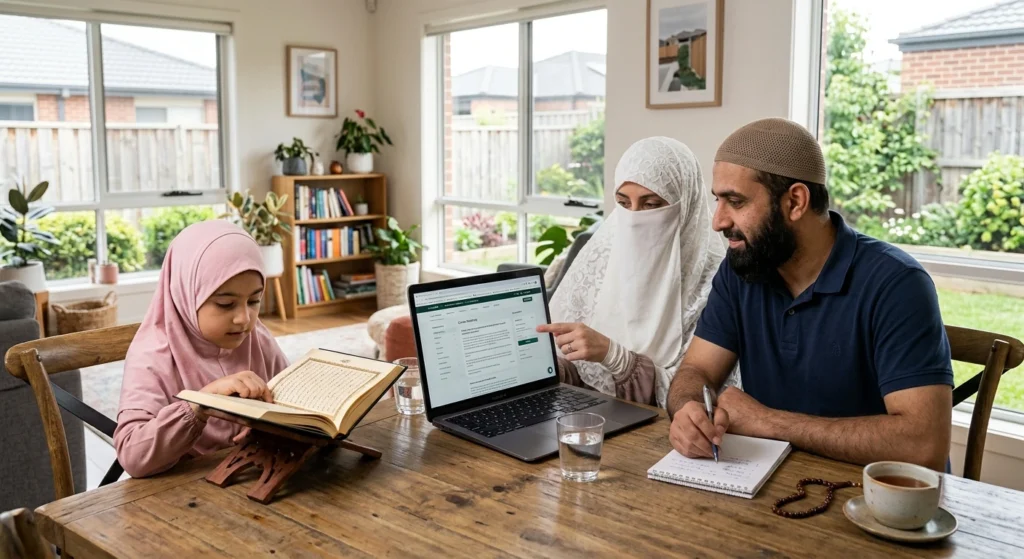
What a Typical Online Tajweed Lesson Covers
One of the most common questions parents ask is, “What actually happens during an online lesson?”
While every academy has its own teaching style, a structured course usually follows a clear progression rather than simply asking students to read page after page.
Week One: Assessment and Goal Setting
The first lesson is usually about understanding the student’s current level.
A teacher may listen to the student read, identify pronunciation habits, and discuss learning goals. Some students begin with basic pronunciation, while others already read fluently but need help applying Tajweed consistently.
This assessment allows future lessons to focus on individual needs instead of following a fixed programme.
Weeks Two to Four: Building Strong Foundations
Once the assessment is complete, lessons begin concentrating on the building blocks of good recitation.
Students usually practise:
- Correct Makhraj for individual letters.
- Clear pronunciation.
- Basic tajweed rules for beginners.
- Reading short passages with teacher guidance.
- Listening carefully and repeating corrections.
Teachers often revisit the same rule several times because repetition helps students develop lasting confidence.
Weeks Five to Eight: Applying Tajweed Naturally
As students become more comfortable, lessons shift from individual sounds to smoother recitation.
Teachers begin helping students:
- Apply Tajweed while reading longer passages.
- Recognise recurring pronunciation mistakes.
- Read with improved rhythm and fluency.
- Build confidence through guided repetition.
Instead of correcting every mistake immediately, experienced teachers often allow students to finish a verse before providing focused feedback. This keeps lessons encouraging rather than overwhelming.
Ongoing Progress
Learning Tajweed is a gradual process.
Students continue revising previous lessons while introducing new concepts at a manageable pace. Regular revision, sometimes referred to as Muraja’ah, helps reinforce earlier learning and prevents students from forgetting important pronunciation rules.
Over time, many learners move naturally towards stronger Quran recitation and, if they choose, later studies such as Hifz or Ijazah preparation.
Benefits of Learning Tajweed Online
A good online course offers far more than convenience.
Students and parents often appreciate:
- Personalised one-to-one teaching.
- Flexible lesson times around Australian routines.
- Immediate pronunciation correction.
- Individual learning pace.
- No travel to and from classes.
- Consistent teacher feedback.
- Structured revision.
- Greater confidence during Quran recitation.
For many busy families, learning from home also reduces missed lessons caused by traffic, weather, or changing weekend commitments.
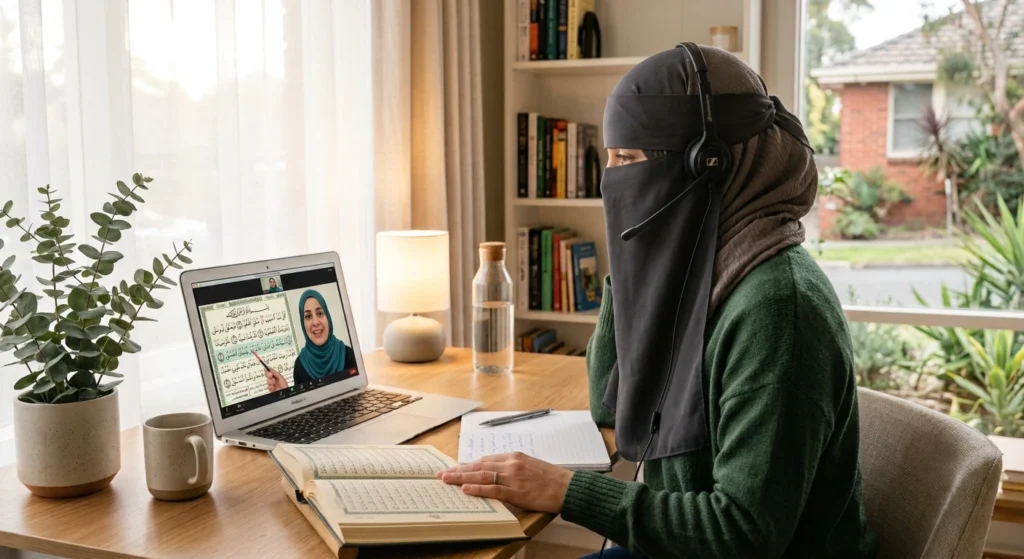
Comparing Online Tajweed Providers
Not every provider delivers the same learning experience.
Looking beyond price can help families choose a course that supports steady progress.
| Feature | Quality Australian-Focused Academy | Generic Provider |
|---|---|---|
| Live one-to-one lessons | ✔ | Sometimes |
| Flexible AEST/AEDT scheduling | ✔ | Limited availability |
| Personal learning plan | ✔ | Standard programme |
| Parent communication | ✔ | Often limited |
| Structured progress tracking | ✔ | Varies |
| Free trial class | ✔ | Sometimes |
| Clear safeguarding information | ✔ | Often missing |
A comparison like this helps families evaluate what matters most rather than choosing solely on monthly fees.
Five Questions Australian Families Should Ask Before Enrolling
Before committing to any academy, ask questions that reveal how the programme actually works.
1. What qualifications do the teachers have?
Look for teachers who can clearly explain Tajweed, provide constructive feedback, and adapt lessons to different learning levels.
2. How are lessons structured?
A clear curriculum helps students move steadily from one stage to the next instead of learning without direction.
3. How is progress measured?
Regular feedback gives parents confidence that lessons are producing meaningful improvement.
4. What safeguarding measures are in place?
Ask how online classes are supervised, how communication is managed, and how the academy approaches child safety. Many Australian parents also want to understand how providers address Working With Children Check expectations where relevant.
5. Will lesson times fit our family routine?
An academy should offer flexible scheduling that works around Australian school hours, work commitments, and AEST or AEDT time zones.
Why Qualified Teachers and Child Safety Matter
Parents often compare course fees first.
In reality, teacher quality has a much bigger impact on long-term success.
A qualified Tajweed teacher does more than identify mistakes. They explain why a correction is needed, demonstrate the correct pronunciation, and encourage students until they become confident using the rule independently.
Some teachers may also hold an Ijazah, demonstrating recognised expertise in Quran recitation through an authenticated chain of transmission. While not every beginner requires an Ijazah teacher, understanding a teacher’s qualifications helps parents make informed decisions.
Child safety deserves the same level of attention.
Before enrolling, parents should feel comfortable asking how lessons are supervised, how student privacy is protected, and what safeguarding procedures the academy follows. Australian families increasingly expect transparency around online learning environments, communication policies, and discussions relating to Working With Children Check requirements where applicable.
A trustworthy academy welcomes these conversations because safety builds confidence for both parents and students.
Trust Checklist Before Booking Any Tajweed Course
Before making a final decision, look for these five essentials.
1. Qualified Teachers
Teachers should have recognised Tajweed knowledge, experience teaching students at different levels, and the ability to provide clear pronunciation correction throughout every lesson.
2. Safety and Child Protection
Ask about safeguarding policies, secure online classrooms, parent involvement, and how the academy approaches child safety. Parents should also feel comfortable discussing Working With Children Check expectations where appropriate.
3. Clear Lesson Structure
Each lesson should include defined learning goals, guided practice, revision, and practical feedback so students know exactly what they are working towards.
4. Structured Learning Pathway
The best programmes provide a clear progression:
Noorani Qaida → Tajweed → Quran Recitation → Hifz → Ijazah
Students develop one stage before moving confidently to the next.
5. Regular Progress Updates
Parents should understand how their child is progressing, which pronunciation skills have improved, and what areas still need attention. Consistent communication helps families support learning between lessons.
If these five areas are clearly explained, you’ll be in a much stronger position to choose a course that supports steady, confident progress.
At this stage, the most practical next step is to book a free trial class and experience the teaching style before making a longer-term commitment.
How Tajweed Fits into the Bigger Quran Learning Journey
Many students begin learning Tajweed with one goal: reading the Quran correctly. As their confidence grows, they often discover that Tajweed is the foundation for every stage of Quran learning that follows.
A structured learning pathway helps students develop one skill before moving to the next. Rather than rushing towards advanced study, they build confidence step by step.
A typical pathway looks like this:
Noorani Qaida → Tajweed → Quran Recitation → Hifz → Ijazah
Students who first master pronunciation usually find it easier to improve fluency later. Those who decide to memorise the Quran through Hifz also benefit because accurate recitation supports stronger memorisation habits.
For students interested in advanced Quran studies, an Ijazah may become a future goal. However, beginners should focus on building consistent Tajweed skills before considering higher levels of study.
If your immediate goal is smoother and more confident recitation, the Quran Recitation Course provides the next step after learning the foundations of Tajweed.
Choosing the Right Tajweed Course for Children and Adults
Children and adults learn differently, so a course should adapt to the student’s stage of life rather than follow exactly the same lesson format.
For Children
Children often learn best when lessons are:
- Short and engaging.
- Interactive rather than lecture-based.
- Focused on one improvement at a time.
- Supported by regular encouragement.
- Reinforced through simple revision at home.
Parents also play an important role. Even spending a few minutes listening to practice between lessons can improve consistency and help children stay motivated.
For Adult Learners
Adults usually bring different challenges to class.
Many have busy work schedules or family responsibilities. Others worry that they have developed pronunciation habits that are difficult to change.
An experienced teacher understands these concerns and adjusts the pace accordingly.
Adult learners generally benefit from:
- Flexible evening or weekend lessons.
- Clear explanations without unnecessary jargon.
- Plenty of opportunities to ask questions.
- Practical correction delivered with patience.
- Regular revision that fits around daily routines.
The goal is steady improvement rather than rushing through the curriculum.
Common Concerns Before Enrolling
It’s normal to have questions before committing to a course. Here are some of the concerns Australian families mention most often.
“Is Online Learning Really Effective?”
Yes-when lessons are live, interactive, and personalised.
A teacher who listens carefully can identify pronunciation mistakes immediately and provide corrections during the lesson. One-to-one teaching also allows students to ask questions without feeling rushed.
Many learners actually make faster progress because lessons focus entirely on their individual needs.
“Will My Child Stay Motivated?”
Consistency often comes from routine rather than pressure.
Scheduling lessons at the same time each week, celebrating small improvements, and maintaining regular communication with the teacher can help children build positive learning habits.
Parents don’t need to become Tajweed teachers themselves. Their encouragement and interest are often enough.
“How Do Lessons Fit Around Australian Time Zones?”
A provider that serves Australian families should offer lesson times that work around AEST or AEDT.
Whether your family prefers lessons before school, after work, or on weekends, flexibility makes it much easier to maintain consistent attendance throughout the year.
“Are Online Tajweed Classes Worth the Cost?”
Looking only at monthly fees can be misleading.
Instead, consider the overall value of the course:
- One-to-one teaching.
- Qualified instructors.
- Personalised feedback.
- Clear curriculum.
- Progress tracking.
- Flexible scheduling.
- Free trial class.
A slightly higher fee may provide a much better learning experience than a cheaper programme with limited support.
What Makes Quran Classes Australia Different?
When comparing providers, many families notice that websites make similar claims. The real difference usually appears in how lessons are planned and how students are supported over time.
Quran Classes Australia focuses on helping Australian families access structured online Quran learning that fits around local schedules.
Key features include:
- One-to-one live online lessons.
- Flexible AEST/AEDT scheduling.
- Male and female teachers.
- Structured learning pathways.
- Courses for children and adults.
- Free trial class before enrolling.
- Personalised learning plans.
Rather than asking every student to follow exactly the same pace, lessons are designed around individual progress. This approach helps beginners build confidence while allowing more experienced students to continue developing their recitation skills.
For parents, regular communication and clear learning goals make it easier to understand how their child is progressing from one stage to the next.
Common Mistakes to Avoid When Choosing an Online Tajweed Course
Choosing the first academy you find can sometimes lead to frustration.
Here are some common mistakes to avoid.
Choosing Based Only on Price
The cheapest option isn’t always the best value.
Qualified teachers, structured lessons, and regular progress updates often have a greater impact on learning than saving a small amount each month.
Skipping the Trial Lesson
A free trial allows you to see how the teacher explains concepts, corrects pronunciation, and communicates with students.
It’s one of the easiest ways to decide whether the teaching style is a good fit.
Not Asking About Teacher Qualifications
Don’t hesitate to ask about teaching experience, Tajweed knowledge, or advanced qualifications where relevant.
A trustworthy academy should answer these questions openly.
Ignoring Safeguarding
Parents should ask how online lessons are supervised, what communication policies are followed, and how student safety is protected.
These discussions are an important part of choosing any online learning provider.
Overlooking Progress Tracking
Without regular feedback, it can be difficult to know whether lessons are producing steady improvement.
Clear progress reports help students stay motivated and allow parents to support learning at home.
Can You Learn Tajweed Online?
Yes. Live online Tajweed classes allow qualified teachers to explain pronunciation rules, correct mistakes in real time, and provide personalised guidance throughout each lesson. With regular practice and consistent attendance, many Australian students steadily improve both their confidence and Quran recitation from home.
Is an Online Quran Class Safe for Children?
Online Quran classes can provide a safe learning environment when providers use secure teaching platforms, maintain clear safeguarding policies, communicate openly with parents, and explain how lessons are supervised. Parents should also ask about teacher qualifications, child protection procedures, and how student wellbeing is supported throughout the course.
Frequently Asked Questions
What are online Tajweed classes?
Online Tajweed classes are live lessons that teach students how to recite the Quran correctly through personalised guidance, pronunciation correction, and structured practice.
Can I learn Tajweed online as a beginner?
Yes. Many beginners start with the basics before gradually learning pronunciation rules and applying them during Quran recitation.
How long does it take to learn Tajweed?
There is no fixed timeline. Progress depends on previous experience, lesson frequency, and regular practice between classes.
Are online Quran classes effective for children?
Yes. Children often benefit from one-to-one lessons because teachers can focus entirely on their pronunciation, confidence, and individual learning pace.
How much do online Tajweed classes cost in Australia?
Fees vary between providers. Instead of comparing only the monthly AUD price, consider lesson quality, teacher experience, personalised support, progress tracking, and whether a free trial class is available.
Conclusion
Finding the right online tajweed classes Australia isn’t simply about choosing the first academy you find. It’s about selecting a provider that combines qualified teaching, structured lessons, flexible Australian scheduling, meaningful progress tracking, and a genuine commitment to student safety.
Whether you’re enrolling your child or returning to Quran study yourself, taking time to compare providers now can make learning more rewarding in the months ahead. Look for a clear curriculum, ask questions about safeguarding, and choose teachers who encourage steady progress rather than quick promises.
The best way to decide if a course is right for your family is to experience it yourself. Book a free trial class and see how personalised Tajweed lessons can fit comfortably into your family’s routine while building confident, accurate Quran recitation for the future.