
If you’re searching for a quran hifz for ladies program in Australia, focus on more than lesson times and fees. The best sisters-only Hifz programs combine qualified female teachers, structured memorisation, flexible AEST/AEDT scheduling, clear progress tracking, and a safe online learning environment that supports long-term success.
For many Australian Muslim families, fitting Hifz around school runs, work hours, university timetables, and weekend commitments can be challenging. Online learning makes that easier, but not every academy offers the same level of teaching or support. Before enrolling, it’s worth knowing what separates a well-structured Hifz program from one that simply promises results.
If you’re comparing providers, start with a free trial class. It gives you the chance to meet the teacher, see how lessons are delivered, and decide whether the learning style suits your goals.
Who This Guide Is For
This guide is for:
- Sisters beginning their Hifz journey
- Adult women returning to Quran memorisation after a break
- Parents looking for a qualified female teacher for their daughter
- Families comparing hifz near me searches with online learning
- Learners seeking sisters Quran classes that fit Australian schedules
Whether you live in Sydney, Melbourne, Brisbane, Perth, Adelaide, Hobart, Darwin, Cairns, the Gold Coast, or another part of Australia, the same questions usually come up. Is the teacher qualified? Will my child stay motivated? Is online learning actually effective? Those are the questions this guide answers.
Why Choosing the Right Quran Hifz for Ladies Program Matters
Hifz is built on consistency rather than speed. A well-designed program helps students memorise new portions while protecting what they have already learned through regular revision.
For many Australian families, the goal isn’t only completing memorisation. They also want a routine that works alongside school terms, extracurricular activities, work commitments, and family life.
A quality Hifz program should help students:
- Memorise at a realistic pace
- Build strong Tajweed alongside Hifz
- Develop regular Muraja’ah (revision) habits
- Gain confidence through achievable milestones
- Create a routine they can maintain throughout the year
When lessons are planned carefully, students are less likely to feel overwhelmed and more likely to stay committed.
Why Many Sisters Choose a Female-Only Teacher
Many women and girls learn more confidently with a female teacher. They often feel more comfortable asking questions, discussing memorisation challenges, and receiving personalised feedback.
For parents, a sisters-only learning environment also provides reassurance. It creates a space where daughters can focus on learning while families understand exactly how lessons are delivered.
A female teacher may also have practical experience helping students balance Hifz with university studies, full-time work, parenting, or secondary school. That understanding often leads to more realistic lesson planning and sustainable progress.
What to Check Before Enrolling
Marketing claims are easy to make. Instead, ask practical questions that reveal how the program actually works.
Teacher Qualifications
Look for teachers who have:
- Strong Tajweed knowledge
- Experience teaching Hifz students
- Recognised Quran teaching certification
- Ijazah where appropriate for the level taught
- Experience teaching women and children
A good teacher knows when to slow down. Memorising smaller sections well is usually more effective than rushing through larger portions without proper revision.
Lesson Structure
Ask how each lesson is organised.
A structured Hifz class normally includes:
- Revision of previous memorisation
- Listening to newly memorised verses
- Correction of pronunciation and Makhraj
- Teaching the next memorisation target
- Homework and revision guidance
Students benefit from knowing exactly what is expected before every lesson.
Communication
Families should also ask:
- How often is progress reviewed?
- Can parents receive updates?
- What happens if a student falls behind?
- Is there flexibility during school exam periods or holidays?
Clear communication helps prevent small difficulties from becoming long-term setbacks.
How a Sisters-Only Hifz Program Is Structured
A successful Hifz journey usually follows clear stages rather than jumping straight into memorisation.
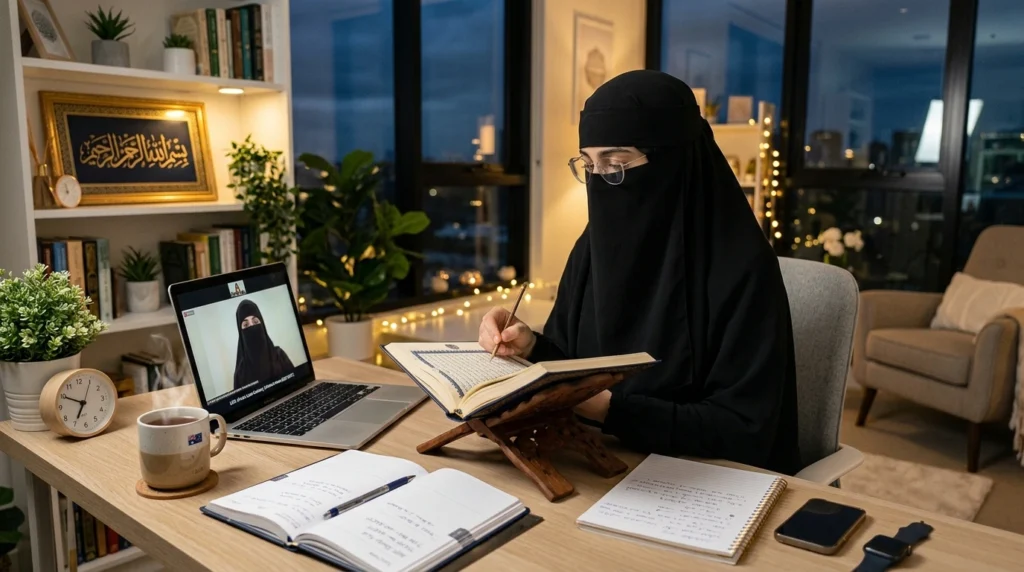
Step 1: Assessment
The teacher evaluates Quran reading, Tajweed, fluency, and previous memorisation.
Step 2: Personal Learning Plan
Each student receives realistic weekly goals based on age, experience, and available study time.
Step 3: Daily Memorisation
Students memorise manageable portions instead of trying to complete too much at once.
Step 4: Muraja’ah (Revision)
Revision remains part of every lesson. Without it, memorisation becomes difficult to retain over time.
Step 5: Progress Reviews
Teachers regularly adjust targets based on consistency rather than rushing students toward unrealistic deadlines.
Trust Matters: What Australian Families Should Expect
Choosing an online Quran academy means trusting both the teacher and the learning environment. Before enrolling, families should understand how lessons are delivered and how students are supported throughout their learning journey.
1. Qualified Female Teachers
A trustworthy academy should clearly explain its teaching standards.
Look for:
- Qualified Quran teachers
- Strong Tajweed instruction
- Experience teaching Hifz
- Ijazah or recognised certification where applicable
- Ongoing guidance throughout memorisation
2. Safeguarding and Student Safety
This is one area many providers barely mention.
Australian parents should ask:
- How are online classes supervised?
- Which platform is used?
- How is student privacy protected?
- Can parents observe lessons if needed?
- What safeguarding policies are followed?
Where children are taught, ask how the academy meets child protection expectations and whether staff interacting directly with children require a Working With Children Check where applicable, or what equivalent safeguarding procedures are in place. Requirements differ between Australian states and territories, so transparency matters.
3. Clear Class Structure
Every lesson should have:
- A consistent format
- Clear expectations
- Professional communication
- Defined learning goals
Students make better progress when lessons follow a predictable routine.
4. Curriculum Pathway
A structured pathway helps students build strong foundations before advancing.
Typical progression:
Qaida → Tajweed → Hifz → Advanced Recitation → Ijazah (where appropriate)
Each stage supports the next, reducing the risk of weak pronunciation becoming a long-term habit.
5. Progress Tracking
Parents should know how progress is measured.
Useful reporting includes:
- Memorisation completed
- Revision consistency
- Tajweed improvements
- Areas needing extra practice
- Next learning goals
A trial lesson is a good opportunity to ask how these updates are shared and how teachers respond if a student loses momentum.
Balancing Hifz with Work, Study, and Family Life
One advantage of online learning is flexibility. Families across Australia can schedule lessons around school, work, and other responsibilities without spending time travelling.
Many students succeed with a simple routine:
- Memorise after Fajr or before school
- Review in the afternoon
- Attend two to five live lessons each week
- Keep daily revision short and consistent
Teachers who understand Australian routines can also adjust lesson times during school holidays, exam periods, or daylight saving changes between AEST and AEDT where applicable.
Consistency usually matters far more than the number of pages memorised each week.
Online Hifz vs Local In-Person Classes
| Feature | Online Sisters-Only Hifz | Local In-Person Classes |
|---|---|---|
| Female teacher choice | Usually easier | Depends on local availability |
| One-to-one attention | ✔ | Often shared |
| Flexible AEST/AEDT scheduling | ✔ | Limited timetable |
| Travel required | No | Yes |
| Suitable across Australia | ✔ | Limited by location |
| Parent communication | Easier | Varies |
For families outside major metropolitan areas, online learning often provides access to experienced female teachers that may not be available locally.
Common Concerns
Is Online Hifz Really Effective?
Yes, when lessons are structured and students revise consistently.
One-to-one teaching allows immediate correction of Tajweed, Makhraj, and memorisation mistakes. Regular feedback also helps students stay accountable between lessons.
What About Class Fees?
Value matters more than finding the cheapest option.
When comparing providers, consider:
- Teacher qualifications
- Lesson length
- Individual attention
- Progress tracking
- Revision planning
- Flexible Australian scheduling
- Whether fees are clearly shown in AUD
Choosing a well-organised program often reduces the risk of changing academies later.
Will My Child Stay Motivated?
Parents often worry that enthusiasm will fade after the first few weeks.
Children usually remain engaged when:
- Goals are realistic
- Lessons feel encouraging
- Revision is manageable
- Parents receive regular updates
- Teachers celebrate steady progress rather than rushing memorisation
Why Choose Quran Classes Australia Instead of a Generic Overseas Provider?
Many online academies use the same sales language. They promise expert teachers, flexible schedules, and affordable classes without explaining how learning actually works.
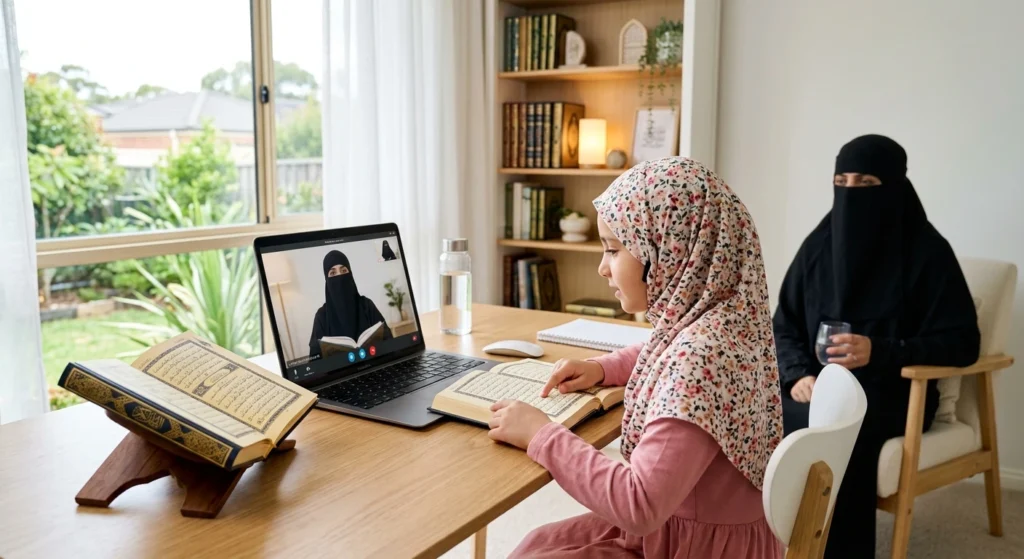
Quran Classes Australia is designed for Australian families. Lessons are scheduled around AEST or AEDT, communication reflects local routines, and students can begin with a free trial before making any commitment.
Common Mistakes to Avoid
Many families focus only on finding the lowest fee. A better approach is to look at the whole learning experience.
Avoid these common mistakes:
- Choosing a program without asking about teacher qualifications
- Ignoring safeguarding and online safety policies
- Skipping the trial lesson
- Asking only about memorisation, not revision
- Selecting lesson times that don’t fit your weekly routine
- Not asking how parents receive progress updates
A few extra questions before enrolling can save months of frustration later.
Can Women Complete Hifz Online?
Yes. Women can successfully complete Hifz online when they learn with qualified female teachers, follow a structured memorisation plan, and practise regular Muraja’ah. Australian learners also benefit from flexible AEST/AEDT scheduling that fits around work, study, and family responsibilities.
How Do I Choose a Qualified Female Quran Teacher?
Choose a teacher with recognised Quran teaching credentials, strong Tajweed knowledge, and experience supporting Hifz students. Families should also ask about safeguarding, lesson structure, progress reporting, and how the teacher adapts learning goals for each student.
Frequently Asked Questions
Can adults start Hifz later in life?
Yes. Many women begin Hifz as adults. A consistent study routine is usually more important than age.
How many Hifz lessons should I take each week?
Most students make steady progress with two to five lessons each week, depending on their available time and revision schedule.
Are one-to-one lessons better than group classes?
One-to-one lessons provide more personalised correction, individual pacing, and direct teacher feedback. They are often a good choice for Hifz students.
Are online Quran classes safe for children?
Parents should choose academies with clear safeguarding procedures, secure online platforms, transparent communication, and appropriate child protection measures.
How long does Hifz usually take?
Every student progresses differently. Previous Quran reading ability, revision habits, lesson frequency, and consistency all influence the overall timeline.
Completing quran hifz for ladies is not about finding the fastest program. It’s about choosing a learning environment where qualified female teachers, structured revision, student safety, and realistic Australian scheduling work together to support lasting progress.
If you’re ready to begin, book a free trial class with Quran Classes Australia. You’ll meet a female teacher, discuss your goals, and experience a structured sisters-only Hifz program before deciding whether it’s the right fit for you or your family.